Tuira Enchanted
15.10.2025
Silent protector of greenery
15.10.2025
Isaac Cordal
Location → Multi-piece artwork located around Oulu
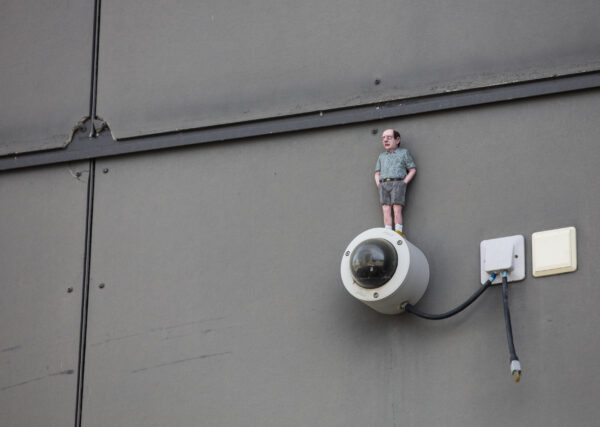
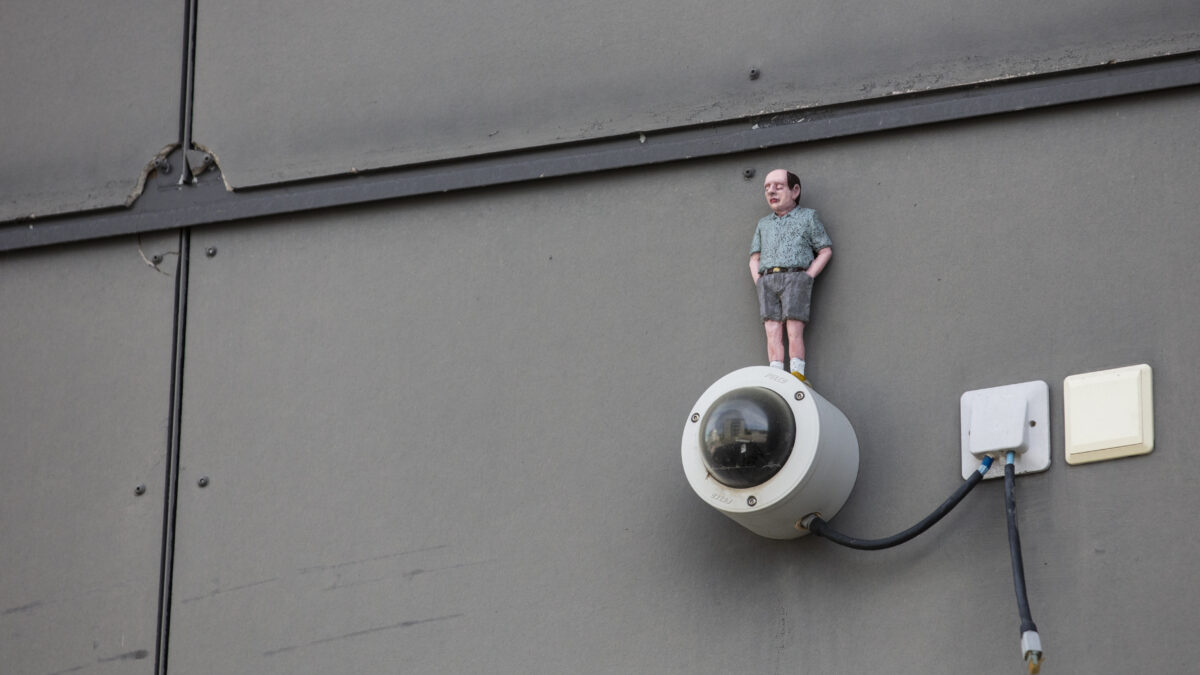
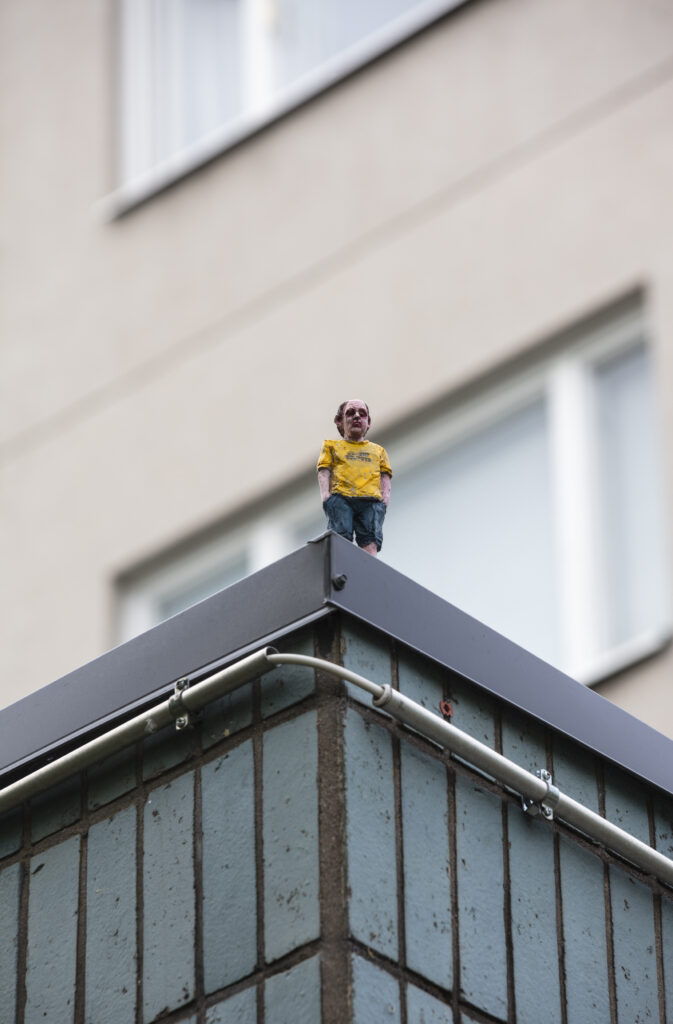
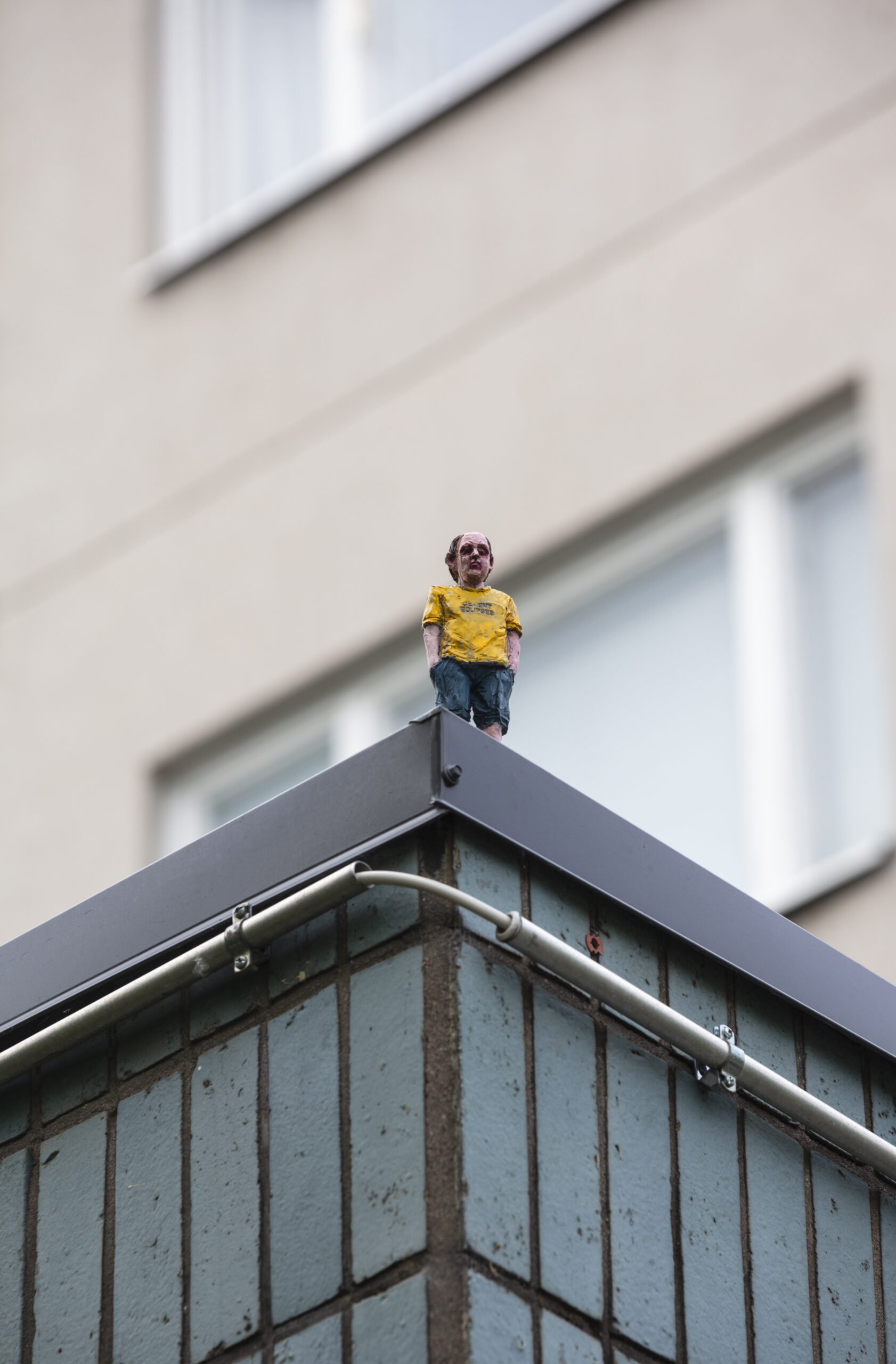
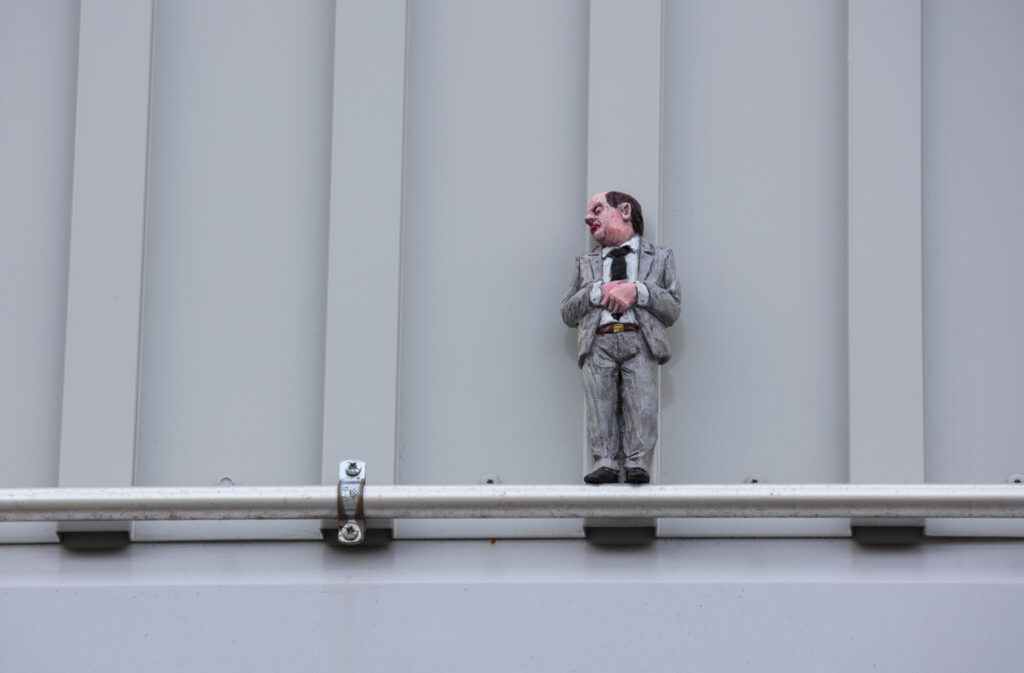
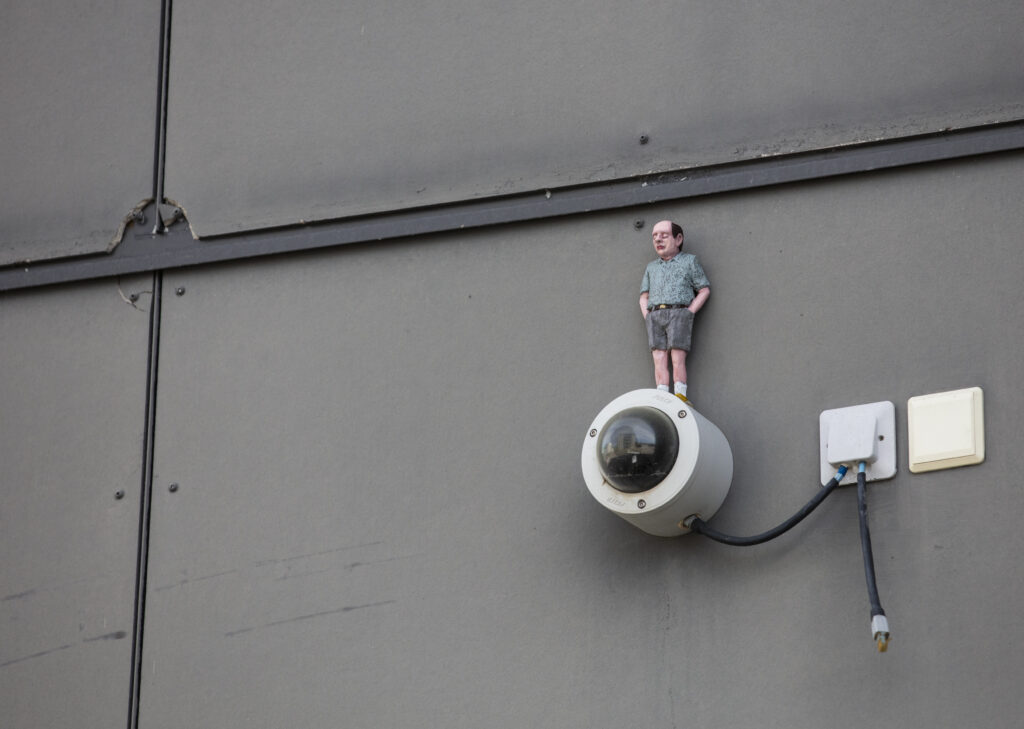
Isaac Cordal’s artwork ”Cement Eclipses” consists of 20 to 30 sculptures that are loated around the city.
The sculpted figures represent a diverse range of characters – women, men, and children – combining both new and existing models to reflect the local population, business owners, and
tourists. These interventions consist of small-scale sculptures installed in elevated locations, approximately four meters above the ground, such as cornices, light poles, window ledges, and walls. The idea is to create a walking route through the neighborhood, encouraging people to explore the area and discover the pieces as part of the urban landscape.
Cement Eclipses is a continuous, wandering installation started in 2006 by the Spanish artist Isaac Cordal. The sculptures of the street art artist have been seen in cities around the world, including New York, Berlin, London, Bogota, Paris, Montreal, Amsterdam and Hanoi. The miniature figures and their surprising locations in the urban environment stop passers-by and open an imaginative dimension to the city.
The “Cement Eclipses” installation takes a gentle but critical look at the collective social behavior of humans. The sculptures depict city dwellers engaged in routine and everyday activities. It’s easy to identify with the sympathetic characters and to laugh at them too. Human characters are resilient survivors in our broken society. The work brings out the social layers of the environment and creates an appreciative look at the unevenness and diversity of the city’s population.
Image: Kati Leinonen
Accessibility
The works are located in the built urban environment in all districts of the art area. The works are accessible via pedestrian routes. The works are located at a height of approximately 4-6 meters. Work-specific accessibility information can be found on the Atla map service.
Image gallery
Artist:
Isaac Cordal
Isaac Cordal (b. 1974, Pontevedra) works with sculpture, installations and photography in public and exhibition spaces. His work has been marked by the places where he has lived, such as London and Brussels. He currently lives in Bilbao.
One of his best-known works is the nomadic project called Cement Eclipses, which consists of ephemeral and permanent urban interventions built with small figurative sculptures with which he reflects on modern society.
From the beginning he works with the same stereotypical character: a middle-aged, bald, uniformed man in a grey suit. The public space plays a leading role, as the chosen location is a fundamental part of his work. Semantic spaces that confuse the scale, those in which we perceive the passage of time, our decadence, that speak to us of our own imperfection. He uses humour and irony in a measured, ambiguous way, at the limits of drama, at that point where you don’t know whether to laugh or cry.