
2.9.-27.9.2026 / Arttila /
FI / EN:
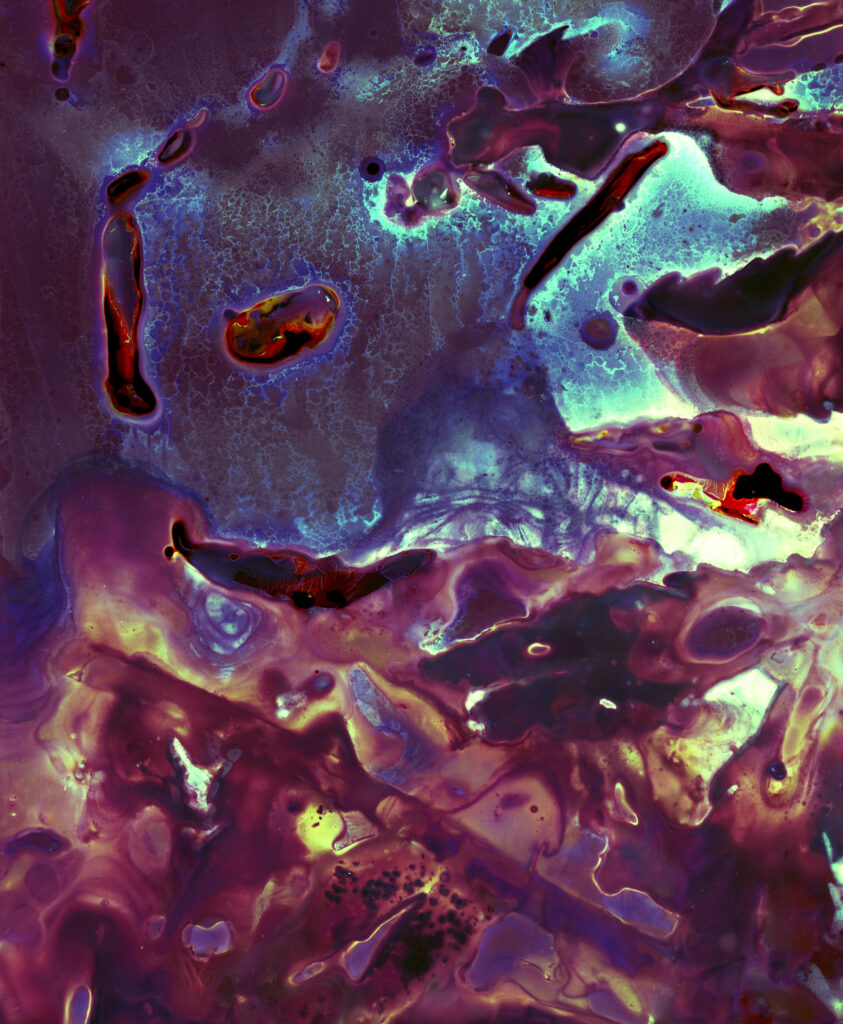
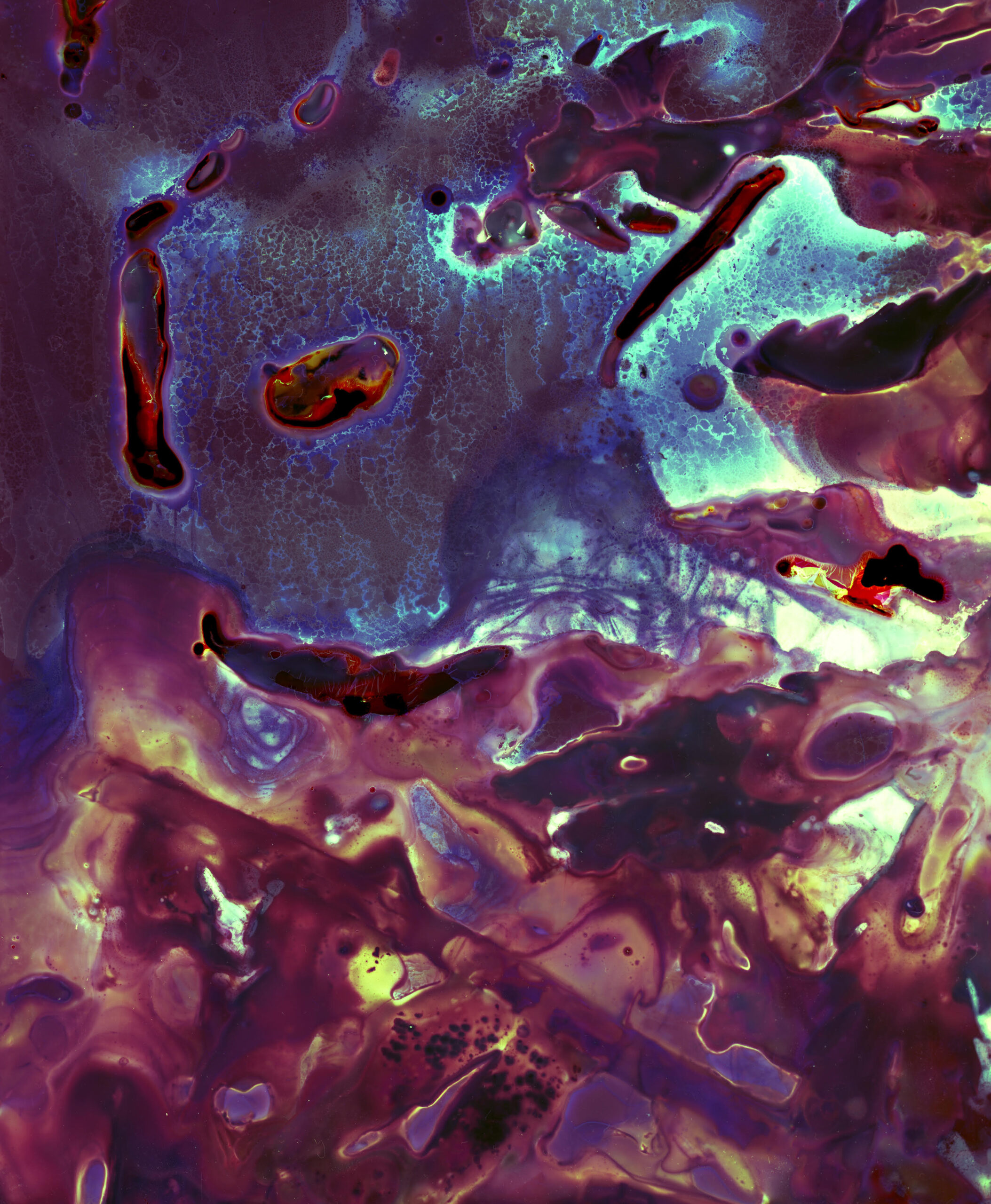
Merileväkokeilut ovat kamerattomia ja ilman valoa värifilmille piirtyneitä tutkielmia, jotka ovat syntyneet merilevien ja valoherkän negatiivin ollessa fyysisesti kontaktissa toisiinsa. Leinosen kokeellisissa kuvissa merilevät osallistuvat kuvien tekemisen prosessiin materiaalisten ominaisuuksiensa kautta. Niiden sisältämät orgaaniset yhdisteet yhdessä meriveden kanssa saavat filmin hopeahalidikiteet reagoimaan kuten ne reagoivat valoon, jolloin ne kehitettäessä muuttuvat hopeametalliksi.
Leinosen työskentely sai alkunsa halusta kohdata näennäisen tavallinen maisema toisin. Valokuvassa maiseman voima kesyyntyy helposti kulttuurisiin tulkintoihin ja estetiikkaan, jota Leinonen lähti purkamaan. Avaamalla tilaa maiseman omalle materiaalisuudelle ja toimijuudelle Leinonen tutkii teoksissaan millaisia jälkiä ja kerrostumia maisema voi jättää sekä kuvaan että kokijaan. Teokset tekevät näkyväksi paitsi maiseman kontrollia pakenevan toimijuuden myös valokuvan materiaalisuuden. Myös kokemus maisemasta muuttuu, kun sitä ei katsota hallittuna panoraamana vaan läheltä, yksityiskohtien ja aineellisten jälkien kautta.
Leinosen työskentelyä orientoi uusmaterialistinen teorianmuodostus, joka korostaa materiaalisen maailman toimijuutta ja ihmisen ja ei-inhimillisen kietoutumista. Veden materiaalisuus on yksi työskentelyn keskeisiä teemoja ja Leinonen ammentaa feministisen kulttuuriteoreetikko Astrida Neimaniksen posthumanistista ajattelua. Neimaniksen mukaan vesikehomme ovat osa laajempaa hydrologista kiertoa, jonka kautta ihmiset, eläimet ja ekosysteemit kietoutuvat toisiinsa. Merilevien huojuvien kasvitieteellisten muotojen ja niiden vesikehojen valoherkälle materiaalille jättämien jälkien kautta Leinonen kutsuu pohtimaan yhteyttämme kaikkeen elolliseen.
Kati Leinonen (1974) on oululainen valokuvataiteilija, joka opiskeli valokuvausta London College of Printingissä (BA) ja audiovisuaalista mediakulttuuria Lapin yliopistossa (MA). Leinonen on dokumentaarisissa taideprojekteissaan käsitellyt muun muassa nykypäivän hevoskulttuuria sekä muistin ja historian yhteen kietoumia. Viimeaikaisissa teoksissaan Leinonen lähestyy valokuvaa kokeellisena välineenä, ja työskentelyn keskeisiksi teemoiksi ovat nousseet valokuvan materiaalisuus, maiseman käsite, vaihtoehtoiset tavat kokea ja kuvata maisemaa. Hänen töitään on ollut esillä yksityisnäyttelyissä Suomessa, muun muassa Oulun taidemuseossa ja Galleria Hippolytessä. Hänen Äimärautio-valokuvakirjansa oli ehdolla Vuoden valokuvakirja 2019-palkinnon saajaksi.
Näyttely on osa Oulu2026-kulttuuriohjelmaa ja kulttuuri-ilmastonmuutosta.
EN:
Seaweed Experiments are cameraless and lightless studies drawn on color film, created when seaweed and a light-sensitive negative are in physical contact with each other. In Leinonen’s experimental images, seaweed participates in the process of making images through their material properties. The organic compounds they contain, together with seawater, cause the silver halides in the film to react as they react to light, transforming them into silver metal when developed.
Leinonen’s work began with a desire to encounter a seemingly ordinary landscape differently. In photography, the power of the landscape is easily tamed by cultural interpretations and aesthetics, which Leinonen set out to dismantle. By opening up space for the landscape’s own materiality and agency, Leinonen explores in his works what kind of traces and layers the landscape can leave on both the image and the experiencer. The works make visible not only the agency that escapes the control of the landscape, but also the materiality of the photograph. The experience of the landscape also changes when it is not viewed as a controlled panorama but up close, through details and material traces.
Leinonen’s work is guided by neo-materialist theory-building, which emphasizes the agency of the material world and the intertwining of the human and the non-human. The materiality of water is one of the central themes of her work, and Leinonen draws on the posthumanist thinking of feminist cultural theorist Astrida Neimanis. According to Neimanis, our bodies of water are part of a broader hydrological cycle through which people, animals and ecosystems are intertwined. Through the swaying botanical forms of seaweed and the traces that their bodies of water leave on the light-sensitive material, Leinonen invites us to reflect on our connection to all living things.
Kati Leinonen (1974) is a photographic artist from Oulu who studied photography at the London College of Printing (BA) and audiovisual media culture at the University of Lapland (MA). In her documentary art projects, Leinonen has dealt with contemporary horse culture and the intertwining of memory and history, among other things. In her recent works, Leinonen approaches photography as an experimental medium, and the materiality of photography, the concept of landscape, and alternative ways of experiencing and describing landscape have emerged as central themes in her work. Her work has been exhibited in solo exhibitions in Finland, including at the Oulu Art Museum and Galleria Hippolyte. Her photo book Äimärautio was nominated for the Photo Book of the Year 2019 award.
The exhibition is part of the Oulu2026 cultural program and cultural climate change.